
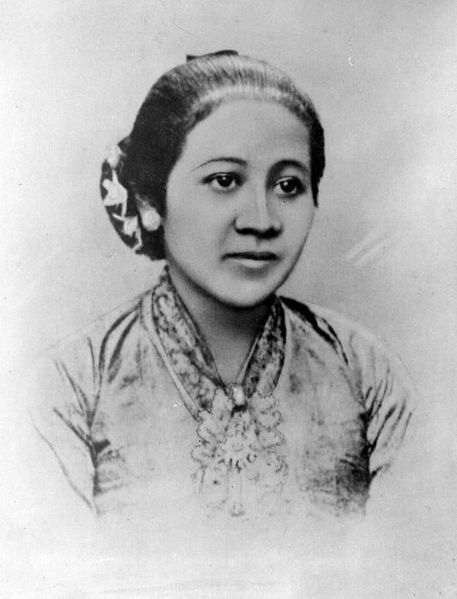
Every April 21st, girls across Indonesia squeeze into ornate kebaya, parade through schoolyards, and recite lines about women’s empowerment. Meanwhile, the woman they claim to honor, Raden Ajeng Kartini, remains unread, misquoted, and, in many ways, unrecognized. The fanfare that accompanies Kartini Day often feels jarringly disconnected from the nuanced critiques and radical vision of the woman herself, whose writings reveal a far more complex picture of female emancipation than the simplified narratives suggest.
We have turned Kartini into a costume, not a challenge. A symbol, instead of a subject. A role model, when in fact, she was a critic of her society, her privilege, her colonizers, and even her own family’s complicity in sustaining oppression. Kartini’s critiques of Javanese society, particularly concerning the constraints placed upon women, were deeply intertwined with her observations of Dutch colonial rule.
Through her prolific letters to Dutch friends like Rosa Abendanon, Kartini exposed the contradictions of her time. She was a priyayi, but felt caged by both colonial rule and Javanese patriarchy. She questioned why native women were denied education, why tradition was used to justify obedience, and why the Dutch claimed to civilize while continuing exploitation. Her intellectual appetite was staggering. Kartini read and reflected on Rousseau, Multatuli, Couperus, and other European thinkers. She devoured Max Havelaar, a blistering critique of Dutch colonialism, and corresponded in fluent Dutch to debate her ideas. Her private library, rare for a woman of her time, was a quiet rebellion. Yet, by the time the Indonesian state rebranded her legacy, the shelves had been dusted off and the revolutionary spirit replaced with sentimentalism.
During the New Order era, Suharto’s regime sanitized Kartini’s image. She became Ibu Kartini, a mother figure and a symbol of wifely duty. The term kodrat wanita (the women’s "natural role") was weaponized to push women back into domesticity. Historian Saskia Wieringa notes how Kartini was “depoliticized and re-domesticated” by the state. The woman who wrote passionately about liberation through knowledge was turned into a poster child for compliance. Public memory is reduced to an outfit, the critique disappears, and the power structure remains unthreatened.
This is not an argument against kebaya. The traditional dress is beautiful, rich in cultural symbolism, and worth preserving. But using kebaya as the centerpiece of Kartini Day turns remembrance into performance. Instead of asking young Indonesians to read Kartini’s letters, we ask them to walk on stages. Instead of discussing how colonialism and feudalism shaped gender injustice, we debate whose hair bun is higher. The displacement of ideas with aesthetics is a clever way of silencing dissent.
If Kartini were alive today, she might not applaud our pageants. She might ask why education remains uneven across gender and region, why patriarchal values continue to be upheld in law and culture, and why women are still underrepresented in politics and overrepresented in care work. She would rage against the systemic violence that remains unresolved: the lack of legal protection for sexual assault survivors, the criminalization of women under morality laws, and the rising cases of online gender-based violence. Kartini, who once saw knowledge as the way to freedom, would demand that we confront the algorithms that turn women’s bodies into commodities and their voices into targets of digital hate.
In a time when female activists are trolled, whistleblowers silenced, and women’s rights dismissed as “Western influence,” Kartini would not be content with polite diplomacy. She would write, protest, educate, and agitate. She would ask why state institutions still treat women’s autonomy as negotiable, and why girls must still ask for permission to dream beyond domestic scripts. Kartini’s legacy is not a celebration. It’s a question mark. What have we done with the freedom she envisioned? Are we building “the pathway to light” (Door Duisternis tot Licht) she longed for or just staging shadow plays with sequins?
We don’t need more ceremonies. We need a national reading of Kartini’s letters, taught not as moral examples, but as political documents. We need to teach young girls that Kartini was not only brave but also furious, not only graceful but also defiant.
Let Kartini be difficult. Let her unsettle us. Because in doing so, she fulfills her role, not as a passive model to admire, but as a critic whose voice still challenges the comfort of the powerful. Until we face that voice honestly, we’re not honoring Kartini. We’re hiding from her.